

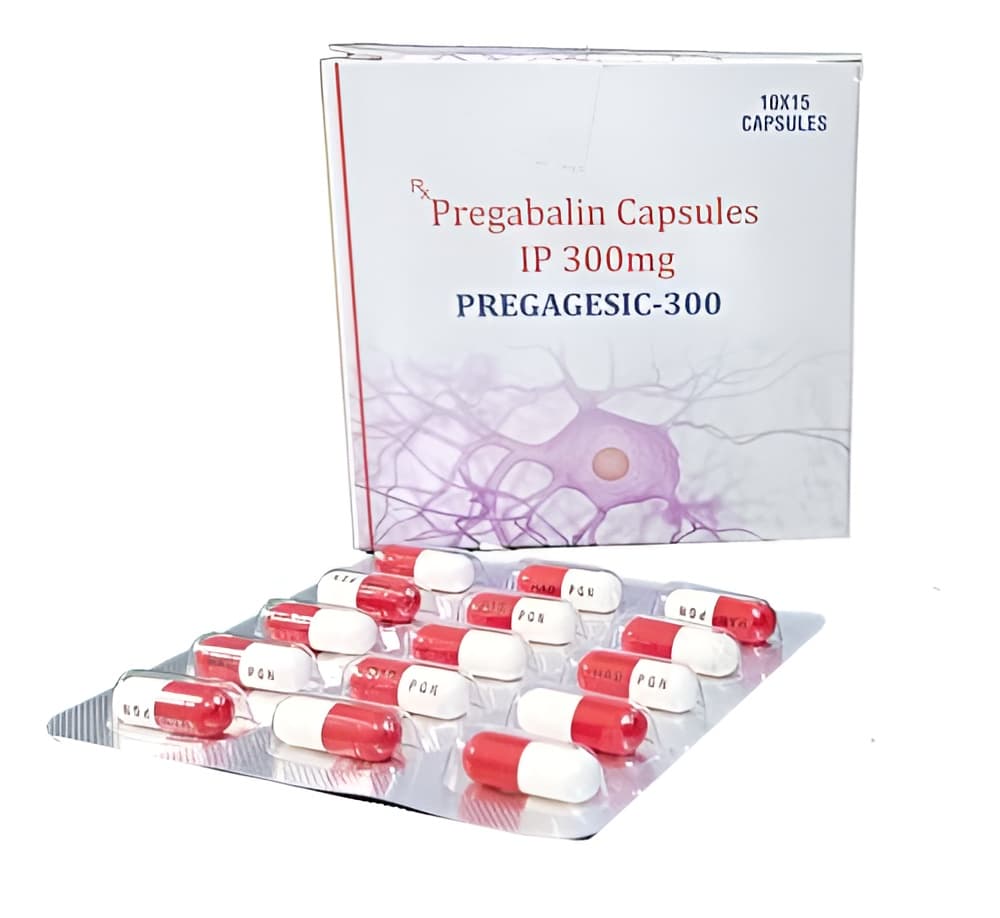
Pregabalin In stock
Pregagesic 300 — Pregabalin Capsules
Pregabalin
Dispatched in 1 working day
From
3 pack sizes€40.00
Active ingredient
Pregabalin is a prescription-only medicine in the EU/EEA and the active substance of Lyrica. Its EU product information authorises it in adults for neuropathic (nerve) pain, as add-on treatment for partial seizures, and for generalised anxiety disorder. It can cause dependence, and it should be stopped gradually over at least one week.
Reviewed by the Kam4eu editorial team on 13 August 2026 · Next review August 2027
6 generic Pregabalin products — same molecule, different brands, formats and pack sizes.
Pregabalin
Dispatched in 1 working day

Pregabalin
Dispatched in 1 working day
Pregabalin
Dispatched in 1 working day
Pregabalin
Dispatched in 1 working day

Pregabalin
Dispatched in 1 working day
Pregabalin
Dispatched in 1 working day
Source: EMA — Lyrica (pregabalin) product information (EU SmPC)
Three medicines used for neuropathic pain, compared on what their EU product information states. All three are prescription-only in the EU/EEA; your doctor chooses the medicine and dose.
| Option | Class | Neuropathic pain (EU indication) | Other EU indications | Source |
|---|---|---|---|---|
| PregabalinLyrica | GABA analogue; binds the alpha-2-delta subunit of calcium channels | Peripheral and central neuropathic pain in adults | Add-on for partial seizures; generalised anxiety disorder (adults) | EMA — Lyrica (pregabalin) product information (EU SmPC) |
| GabapentinNeurontin | Antiepileptic structurally related to GABA | Peripheral neuropathic pain, such as painful diabetic neuropathy and post-herpetic neuralgia, in adults | Partial seizures: add-on from age 6, monotherapy from age 12 | EMA — Neurontin (gabapentin) Article 30 referral |
| DuloxetineCymbalta | Serotonin and noradrenaline reuptake inhibitor (antidepressant) | Diabetic peripheral neuropathic pain in adults | Major depressive disorder; generalised anxiety disorder | EMA — Cymbalta (duloxetine) EPAR |
Source: EMA — Lyrica (pregabalin) product information (EU SmPC)
Source: EMA — Lyrica (pregabalin) product information (EU SmPC)
Pregabalin is a gamma-aminobutyric acid (GABA) analogue, but it does not act directly on GABA receptors. It binds to an auxiliary subunit (the alpha-2-delta protein) of voltage-gated calcium channels in the central nervous system, which reduces the release of several excitatory neurotransmitters involved in pain signalling, seizure activity and anxiety. It is absorbed quickly, with peak blood levels within about an hour, and is removed from the body mainly unchanged through the kidneys.
Take pregabalin exactly as prescribed. The EU product information describes a daily dose range of 150 to 600 mg, given in two or three divided doses, usually started low and increased step by step over one to a few weeks depending on response and side effects; your doctor sets and adjusts your dose. It can be taken with or without food. People with reduced kidney function need a lower dose. Never stop suddenly: the EU product information recommends stopping gradually over at least one week.
The EU product information lists dizziness, drowsiness (somnolence) and headache as very common (1 in 10 people or more). Common side effects (1 to 10 in 100) include increased appetite and weight gain, blurred or double vision, vertigo, nausea, vomiting, constipation, diarrhoea, dry mouth, swelling of the hands or feet (oedema), unsteadiness, memory or concentration problems, confusion and irritability.
Source: EMA — Lyrica (pregabalin) product information (EU SmPC)
Common (usually mild and temporary):
Stop and seek medical help if you experience:
Store in the original packaging out of the sight and reach of children, and do not use after the expiry date. The EU product information states no special storage conditions are required. Return unused medicine to a pharmacy for safe disposal.
Per the EU product information, dizziness, drowsiness and headache are very common, affecting 1 in 10 people or more. Common ones include increased appetite and weight gain, blurred or double vision, dry mouth, constipation, nausea, swelling of the hands or feet and unsteadiness. Less common but serious: swelling of the face, lips or throat (angioedema), thoughts of self-harm or suicide, and breathing problems, particularly with opioids or other sedatives. Call 112 for facial swelling or breathing difficulty.
Its EU product information authorises it in adults for peripheral and central neuropathic (nerve) pain, as add-on treatment for partial seizures with or without secondary generalisation, and for generalised anxiety disorder.
No. Withdrawal symptoms reported after stopping include insomnia, headache, nausea, anxiety, diarrhoea, flu-like symptoms, nervousness, depression, pain, sweating, dizziness and seizures. The EU product information recommends stopping gradually over at least one week.
Yes. The EU product information states that pregabalin can cause drug dependence, which may occur at therapeutic doses, and that cases of misuse and abuse have been reported. Take it only as prescribed and never share it.
Pregabalin can add to the effects of alcohol and other sedatives. With opioids there have been reports of respiratory failure, coma and deaths, and a study linked the combination to a higher risk of opioid-related death. Discuss any such use with your doctor.
The EU product information warns that use in the first trimester may cause major birth defects and that pregabalin should not be used in pregnancy unless clearly necessary. Women who could become pregnant must use effective contraception during treatment.
Gabapentin also acts on the nervous system and is authorised for peripheral neuropathic pain and epilepsy. Duloxetine is an antidepressant authorised for diabetic peripheral neuropathic pain, depression and anxiety. Pregabalin is the only one of the three authorised for central neuropathic pain. See the comparison table on this page.
Important: This information is general and not a substitute for medical advice. Always read the patient information leaflet supplied with your medicine and consult a doctor or pharmacist before use — especially if you have existing health conditions or take other medication.
European Medicines Agency product information: uses, dosage, side effects, stopping safely.
The EU Summary of Product Characteristics: indications, dosing range, dependence, withdrawal, pregnancy and interactions.
Harmonised EU product information for gabapentin, including its neuropathic-pain indication.
EU indications of duloxetine, including diabetic peripheral neuropathic pain.
Peer-reviewed clinical pharmacology reference.
Summary: Pregabalin and gabapentin are related nerve-pain medicines that calm overactive nerve signalling. Pregabalin is absorbed more predictably, while gabapentin's absorption varies more, so they are dosed differently and are not interchangeable like for like. Both can cause drowsiness and dependence, are controlled in many European countries, and must never be stopped abruptly.
Read guideSummary: Pregabalin is authorised in the EU for generalised anxiety disorder, as well as nerve pain and epilepsy. That is according to the EMA product information for Lyrica. It calms overactive nerve signalling and is usually considered alongside or after talking therapies. It is a controlled medicine with a risk of dependence, and it must never be stopped suddenly.
Read guideSummary: Sciatica is shooting, burning pain from an irritated or compressed sciatic nerve, running from the lower back down one leg. It is usually caused by a slipped disc or spinal narrowing. Most settle with time, staying active and simple pain relief. Get urgent help, calling 112 if needed, for numbness around the genitals or loss of bladder or bowel control.
Read guideSummary: Pregabalin calms overactive nerve signalling, while duloxetine is an SNRI antidepressant that strengthens the body's own pain-dampening pathways. Both treat nerve pain, are taken daily, take time to work and should not be stopped suddenly. Pregabalin is a controlled medicine in some countries; the right choice depends on your other conditions.
Read guideConditions Pregabalin treats